Cichlids · Advanced care
Borellii apistogramma
Apistogramma borellii
Borellii apistogramma is rated advanced here because of its adult size, water range and social needs. Plan the aquarium around adult size, territory and sight breaks rather than shop size.
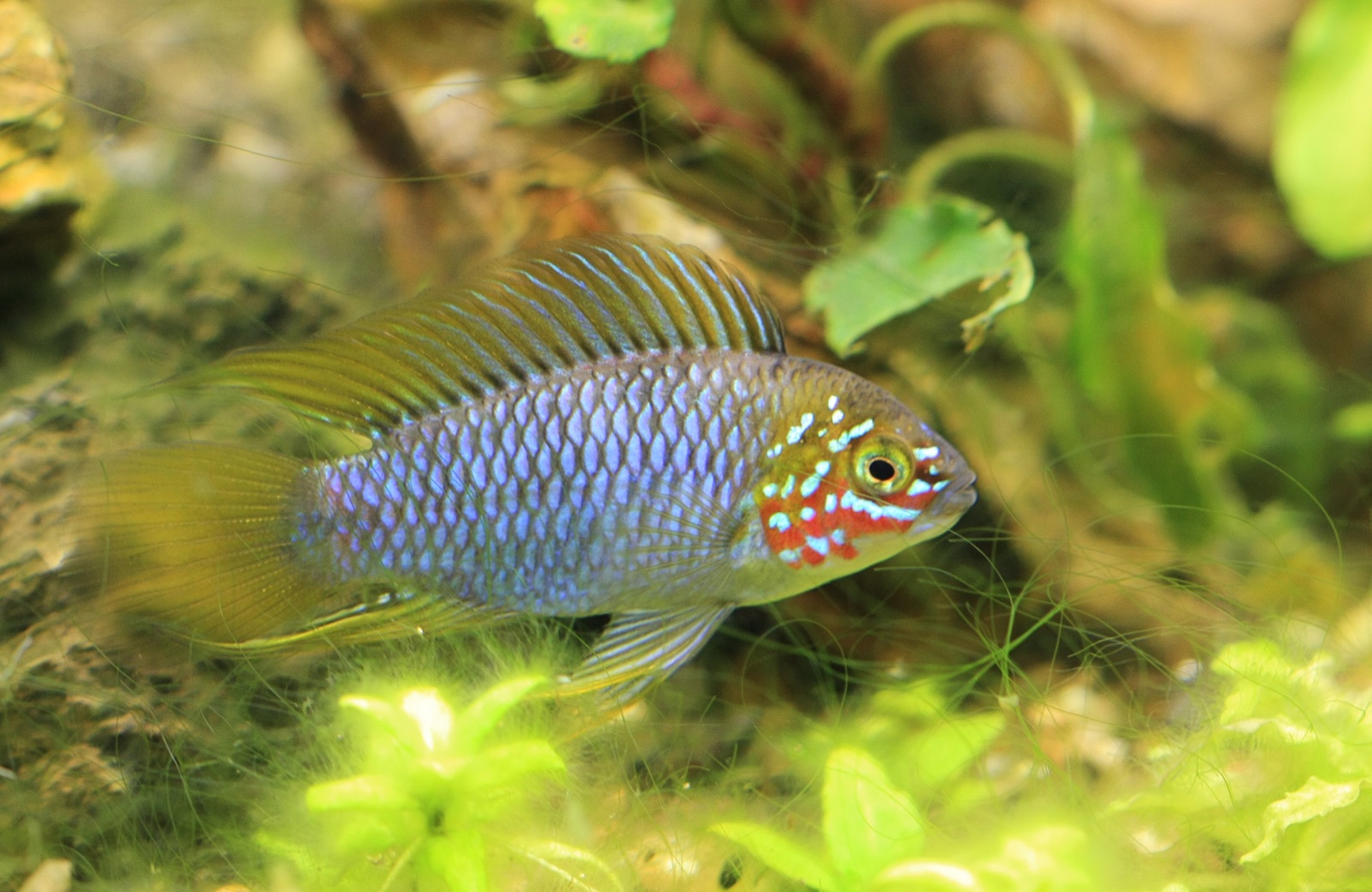
Is Borellii apistogramma a good aquarium fish?
Borellii apistogramma reaches about 7 cm as an adult, so plan around the adult fish rather than the juvenile size seen in shops. The suggested minimum of 20 US gallons assumes suitable filtration, open swimming space and routine maintenance.
Territorial, especially when breeding. Keep the recommended group of one fish or a compatible pair and avoid mixing it with tank mates that need a very different temperature, water chemistry or swimming level.
Water and aquarium setup
A stable temperature of 20–27°C and pH of 5.5–7.5 are the working ranges in the planner. Stability and clean, oxygenated water matter more than chasing a single target number.
Break up sight lines with rock, wood or plants and reserve territory before adding fish. Breeding pairs can change a peaceful community quickly.
Diet
A varied omnivore or carnivore diet of quality pellets, frozen foods and occasional treats.
Compatibility notes
Borellii apistogramma is generally workable in a community aquarium when the tank mates share its temperature range and social needs.
Use the Stocking & Bioload Planner to check a proposed community. Its estimated bioload value for one adult borellii apistogramma is 2.32 units; this is a planning heuristic, not a replacement for testing nitrate.
Common mistakes
- Planning around the shop size instead of the adult size.
- Adding a schooling fish in a group smaller than its social minimum.
- Ignoring the tank's length, floor area or lid because the gallon number looks adequate.
- Adding fish before the aquarium is cycled and ammonia and nitrite are consistently zero.
Care ranges are conservative summaries of commonly cited husbandry references. Individual fish, strains and local water can differ; monitor the aquarium and adjust the plan gradually.
Photo source: Dornenwolf (https://www.flickr.com/photos/gartenfreuden/) · CC BY 2.0. The local copy is resized for page performance.