About Tank Math Lab
Tank Math Lab is an independent website about freshwater aquariums, focused on the numbers that decide whether a tank thrives: real water volume, bioload, ammonia and nitrite during cycling, nitrate between water changes, and the hardness and pH of the water you start with. It launched in 2026.
Why this site exists
Advice for new fishkeepers is full of shortcuts such as “one inch of fish per gallon” or “wait a week before adding fish.” They are easy to remember and often wrong in ways that cost fish. Good answers exist, spread across extension publications, species databases, forum threads and manufacturer documents, but they rarely arrive together with the arithmetic. Tank Math Lab puts the reasoning and the math in one place and shows its work, so readers can check it with their own test kits.
Who runs it
Tank Math Lab is operated by Tank Math Lab, a distributed team of freshwater aquarium hobbyists who research, check and explain the numbers behind healthier tanks. The team brings together fishkeeping experience from Australia, the United Kingdom, the United States, Singapore, China and Indonesia.
- AlexAustralia
- NormanUnited Kingdom
- JeremyUnited States
- FeiFeiChina
- PutraTeam contributor
These are the five current contributors: Alex, Norman, Jeremy, FeiFei, Putra. Their documented setups are listed below and will grow as the team adds measurements, photos and maintenance logs.
Documented team aquariums
Six of the team’s nine documented setups are highlighted here. Volumes marked “about” are geometric estimates from the reported dimensions and will be refined when the filled water volume is measured; the remaining documented setups are kept in the team’s internal records until their public details are complete.
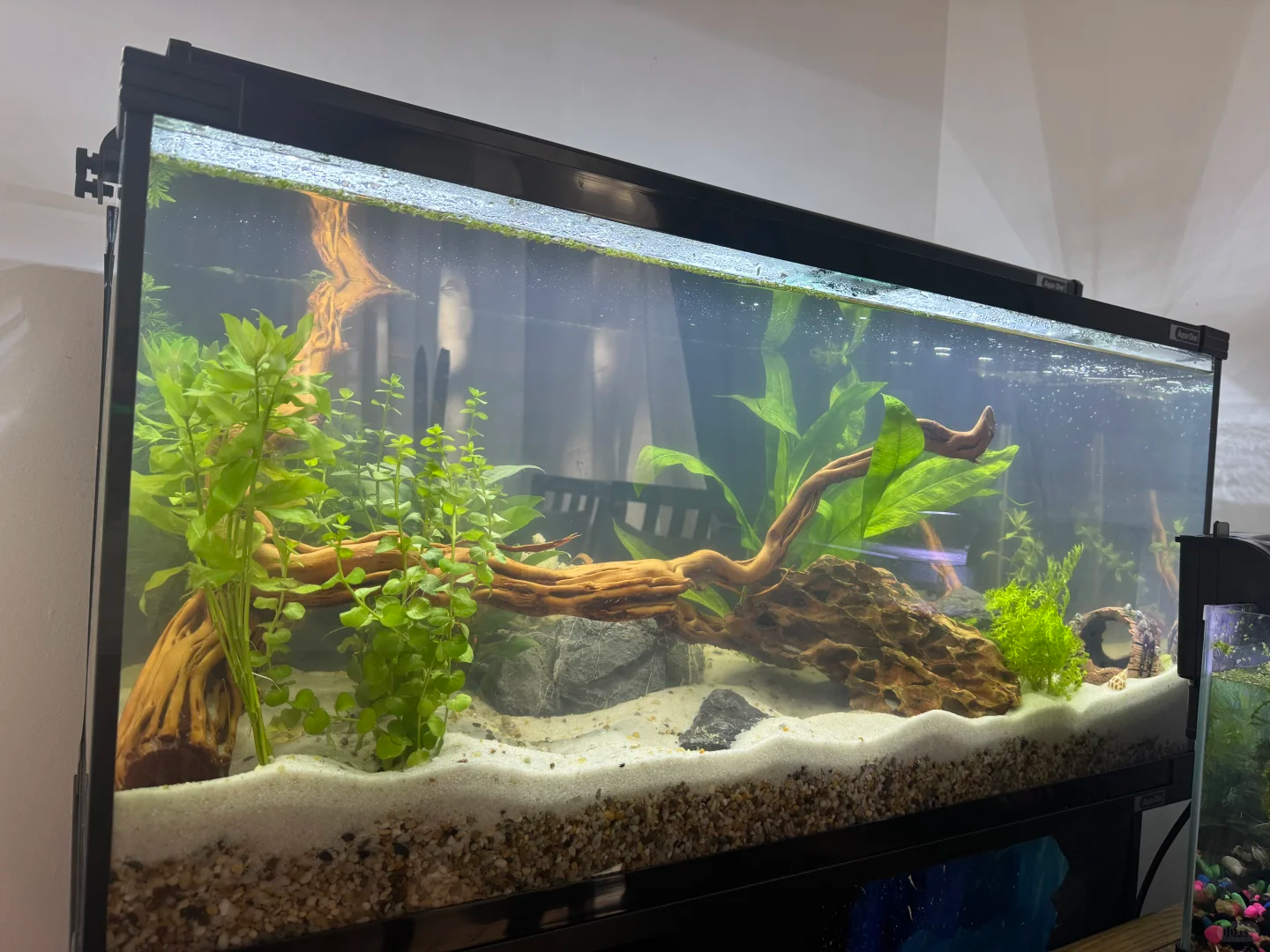
Alex · Australia
Aqua One Horizon 130L
130 L
Planted setup with aquatic plants, stones, spider wood and 40 kg of sand.
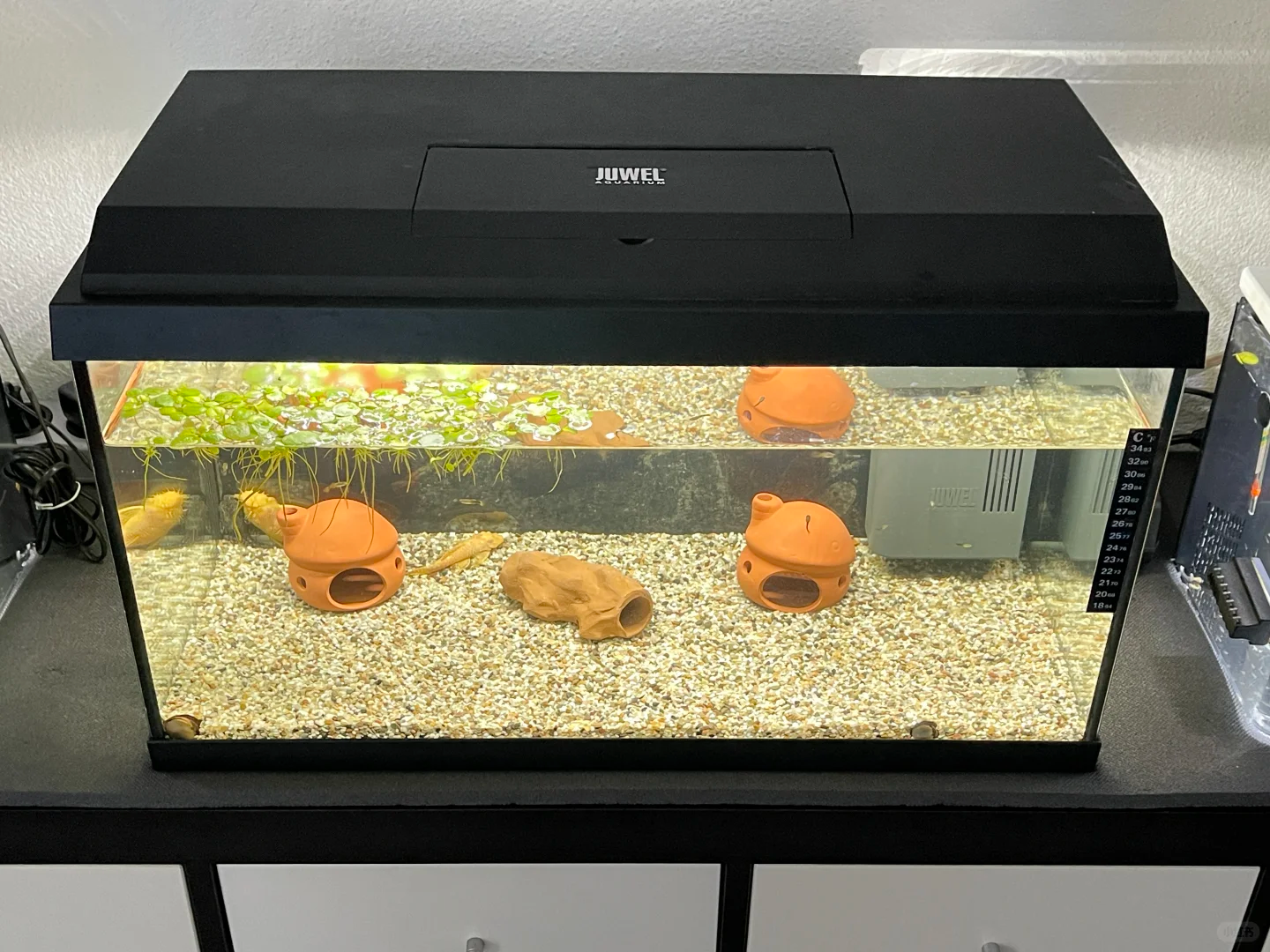
Norman · United Kingdom
Juwel Primo 60 2.0
57 L · 61 × 37 × 37 cm
Freshwater beginner setup with Bioflow internal filtration, Eccoflow 300 pump, 50 W heater and NovoLux 60 LED.
Norman · United Kingdom
Cubito planted tank
36.45 L · 45 × 27 × 30 cm
Planted layout; volume is calculated from the reported outer dimensions.
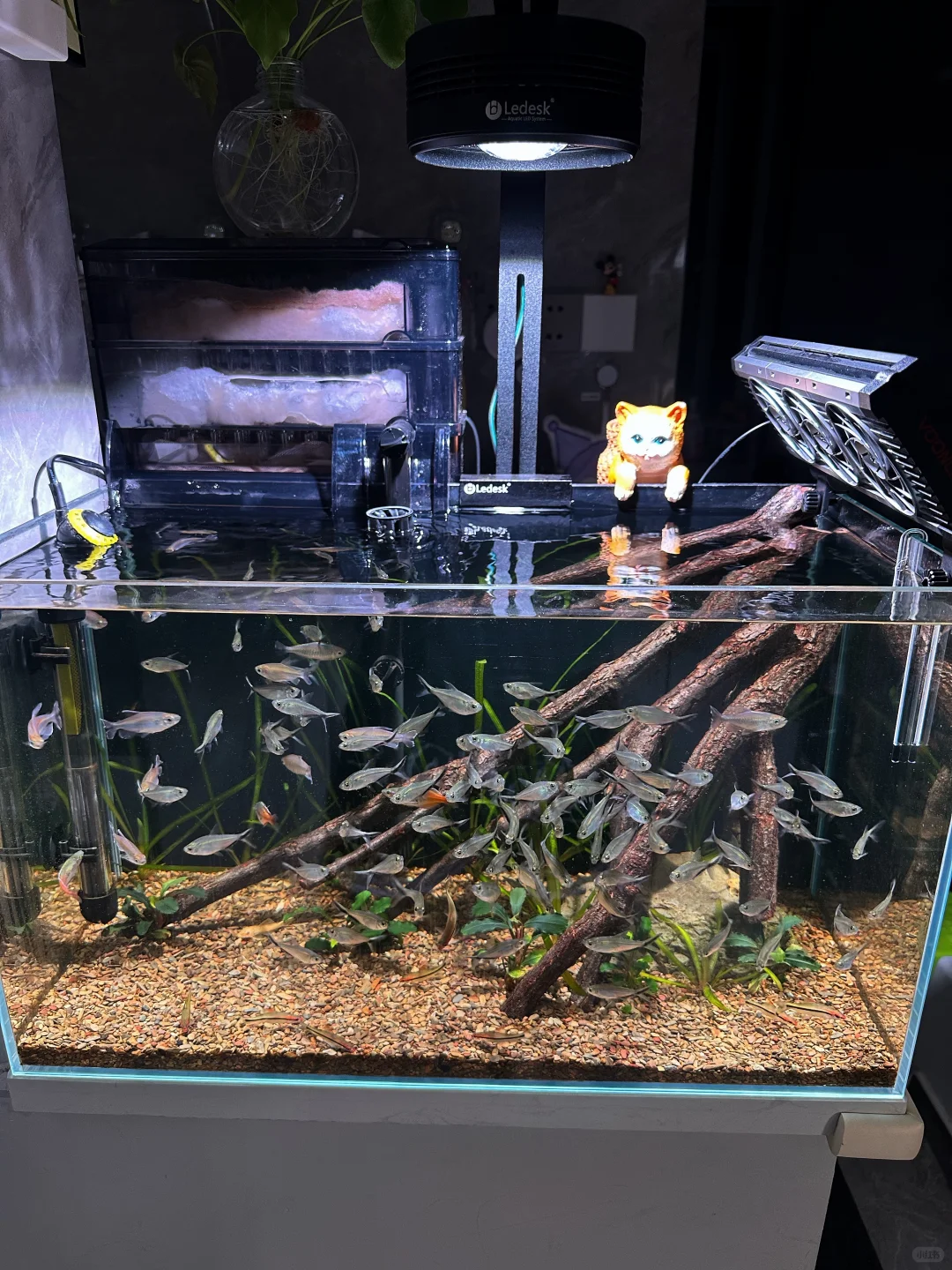
FeiFei · China
Custom ultra-clear glass tank
About 63 L · 60 × 30 × 35 cm
Sink half-wall planted tank with stream sand, yellow pear wood, Bucephalandra and Vallisneria.
FeiFei · China
Xin Han Jiang tank
About 64.8 L · 60 × 30 × 36 cm
Ledesky 72 W light, Chuangning 200 W heater and An Cai 650 surface-skimmer filter; stocking list recorded in the team knowledge base.
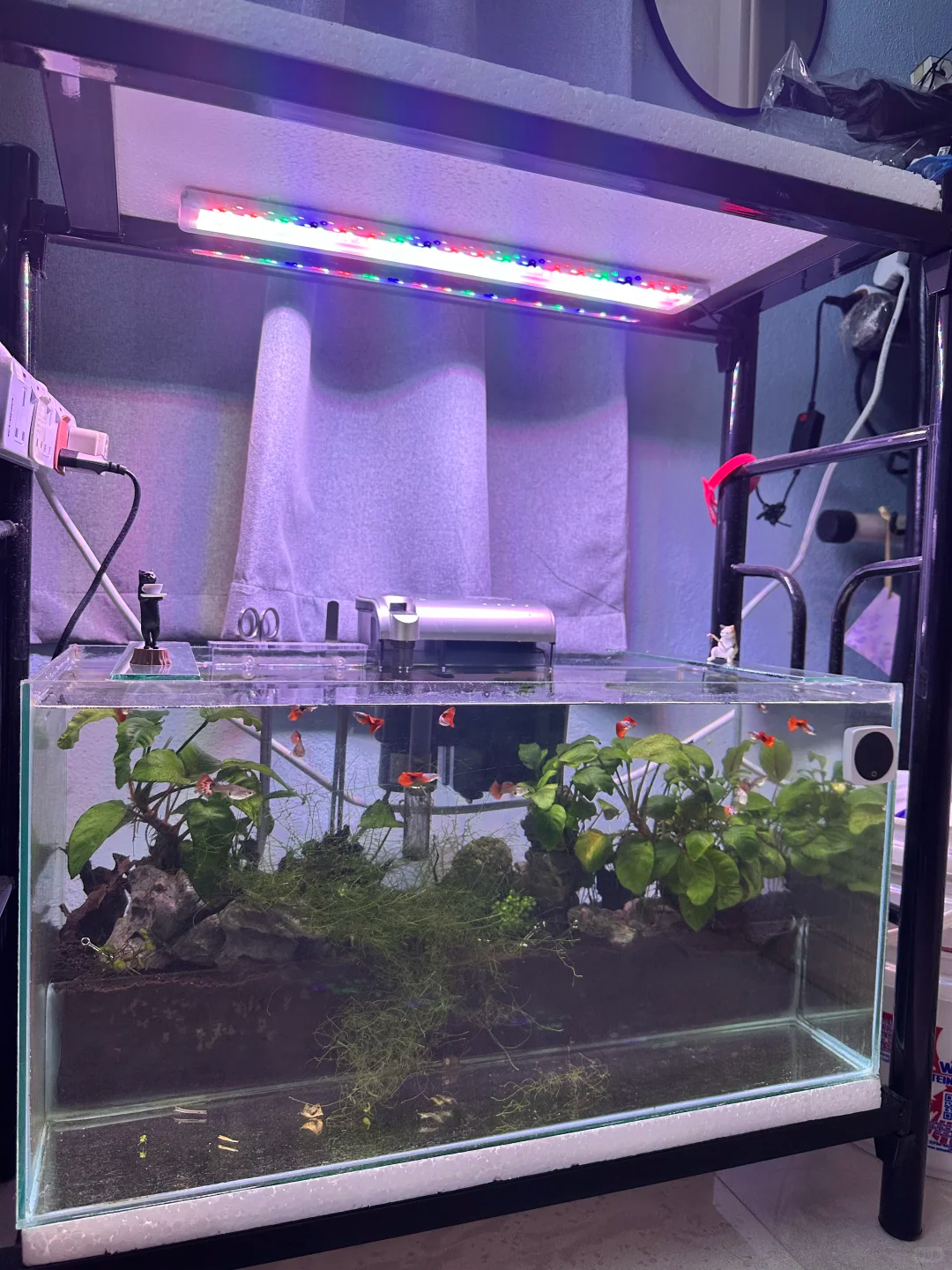
Jeremy · United States
60 cm guppy and planted tank
60 cm aquarium; exact width and height not recorded
At least 15 guppies with Anubias and moss, Shiruba XB-2100 canister filter and RGB aquarium light.
Team practice tank
90 × 40 × 40 cm · approximately 144 L gross
Our current practice plan uses 10–12 tiger barbs and 6–8 Kuhli loaches. The proposed setup uses fine, sharp-free sand, driftwood or rocks with plants, filtration sized for roughly 5–7 turnovers per hour, moderate light for 6–8 hours a day and a secure lid or anti-jump net.
The 144 L figure is the outer-dimension estimate; substrate and hardscape reduce the actual water volume. The team will cycle the tank, test the water and add fish in batches before treating the plan as field-validated.
How content is made
- Calculators are built from published chemistry and cited husbandry data, and every formula is shown on the tool page.
- Guides cite their sources and show worked examples. They are reviewed against those sources before publishing and when readers report problems.
- When we publish first-hand measurements or photos, we include the method, equipment and date so readers can judge the evidence for themselves.
The full process, including our use of software tools during drafting, is described in the editorial policy.
How the site is funded
Tank Math Lab does not currently carry advertising, sponsored posts or affiliate links. If that changes, advertising will be clearly labeled, kept out of calculators’ input areas, and will never influence what we recommend. Any affiliate links would be disclosed on the page where they appear.
Get in touch
Corrections, questions and suggestions for new calculators are welcome through the contact page.